
The Software Licensing Revolution: From Perpetual to Subscription
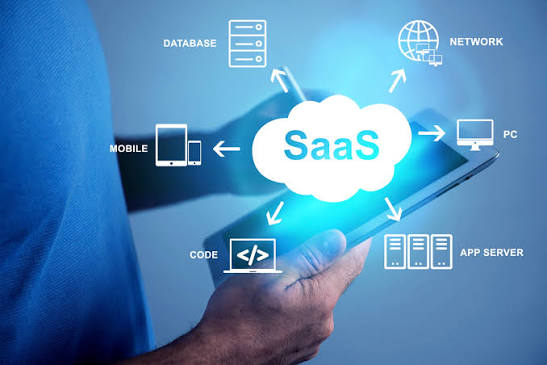
The software industry’s transition from the perpetual licence model (pay once, own the software forever) to the Software as a Service subscription model (pay monthly or annually for access to software delivered over the internet) has been one of the most significant business model shifts in the technology industry’s history. The transition has been beneficial for software vendors (converting unpredictable licence revenue into predictable recurring revenue, enabling continuous product improvement funded by ongoing subscription income, and creating the customer relationship continuity that enables expansion revenue), beneficial for software consumers in some respects (lower upfront cost, access to always-current software, no infrastructure to manage), and detrimental in others (no ownership of the software, accumulated subscription costs that may exceed perpetual licence costs over longer time horizons, and dependency on vendor continuity and pricing decisions).
The SaaS business model economics that most determine which vendors will thrive and which will struggle: the relationship between customer lifetime value (the total revenue generated from a customer over their relationship with the vendor) and customer acquisition cost (the total marketing and sales cost required to acquire each customer). The SaaS vendor whose customers pay two thousand dollars per year on average and retain for four years generates eight thousand dollars in lifetime value; the one that spends twelve thousand dollars to acquire each customer is destroying value regardless of its growth metrics. The SaaS businesses that achieve the best outcomes are those that find efficient customer acquisition channels, optimise product quality to maximise retention, and expand revenue from existing customers through upsell and cross-sell — the combination that produces the lifetime value that justifies the acquisition cost.
How to Evaluate SaaS Products
The SaaS product evaluation framework that most reliably identifies products worth the subscription commitment: the trial period assessment that evaluates the product against the specific workflows and outcomes the business needs to achieve, rather than against the features list in the product description. The product that has an impressive features list but a clunky user interface, that requires extensive configuration before it becomes useful, or that solves a slightly different problem than the one the business has will disappoint after the trial; the one that is immediately intuitive, that works for the specific workflows in the first session, and that clearly addresses the actual problem will deliver on its promise.
The SaaS vendor evaluation criteria that extend beyond the product itself: the vendor’s financial stability (the SaaS vendor that goes out of business takes the software with them — for business-critical applications, vendor financial health and investor backing are relevant considerations), the data portability terms in the contract (the ability to export all company data from the platform when the contract ends, in a usable format, is a vendor dependency risk that must be evaluated before signing), and the security certifications and practices (SOC 2 Type II certification, GDPR compliance, and documented security practices are the minimum expected from any SaaS vendor that will handle business data).
Managing SaaS Sprawl and Costs
The SaaS management challenge that most organisations discover after several years of subscription adoption: the accumulation of SaaS subscriptions across departments and employees without centralised visibility, governance, or optimisation. The enterprise that has been growing its SaaS portfolio for five years may have hundreds of active subscriptions — many overlapping in functionality, some unused by the employees they were purchased for, and some whose licences are dramatically oversized relative to actual usage. The SaaS management platform category (tools like Torii, Zylo, and Sastrify) has emerged specifically to provide the visibility and governance that accumulated SaaS portfolios require.
The SaaS cost optimisation audit that most businesses can conduct without specialised tools: the reconciliation of active subscriptions against the list of employees who actually use each product. Most SaaS vendors charge per user, and the licence count negotiated at the beginning of the contract may not reflect the actual user count after employee departures, role changes, or shifts in how the product is used. The annual licence review that compares contracted user counts against actual active users typically identifies 15-30% licence reduction opportunities in organisations that have not previously conducted this review.
SaaS Security and Compliance
The SaaS security considerations that most affect business risk: the data classification of the information that will be stored in the SaaS application (which determines the security and compliance requirements the vendor must meet), the user access management integration (whether the SaaS application supports Single Sign-On through the organisation’s identity provider, which enables centralised access control and automatic access revocation when employees leave), and the vendor’s sub-processor list (the other SaaS vendors and cloud providers that the SaaS vendor uses to provide its service, which expands the data exposure surface beyond the primary vendor).
The SaaS compliance consideration that most affects regulated industries: the data residency requirement. Organisations in the European Union subject to GDPR, or in industries subject to data localisation requirements, must ensure that the SaaS products they use store and process data in compliant geographic locations. The SaaS vendor that stores all data in US-based data centres may not be compliant for EU-based organisations processing personal data without appropriate data transfer mechanisms; the vendor that provides regional data residency options in Europe enables compliance. Confirming data residency before signing is a contractual due diligence requirement that is much simpler to address before the vendor relationship begins than after data has already been ingested.
The Future of SaaS: AI Integration and Vertical Specialisation
The SaaS product development trend that most clearly defines where the category is heading: the deep integration of AI capabilities into the core product experience rather than as a separate AI feature layer. The SaaS applications that are winning market share in 2025 are not those that have added an AI chat interface to an otherwise unchanged product, but those that have rebuilt their core workflows around AI assistance — the CRM that automatically researches prospects and drafts outreach, the project management tool that identifies schedule risks from task completion patterns, and the accounting platform that automatically categorises transactions and flags anomalies. This AI-native product development is raising the capability bar for the entire SaaS category.
The SaaS market evolution that most affects purchasing decisions for specific business applications: the continued movement toward vertical SaaS — software designed specifically for a single industry or business type. The generic project management tool that works for any industry and the restaurant-specific platform that handles table management, ordering, inventory, and labour scheduling represent very different value propositions for a restaurant operator. The vertical SaaS product that deeply solves the specific workflows of a specific industry is capturing market share from the horizontal tools that were the default choice before vertical alternatives existed — and the industries with the most successful vertical SaaS penetration are those with the most distinctive workflow requirements.