
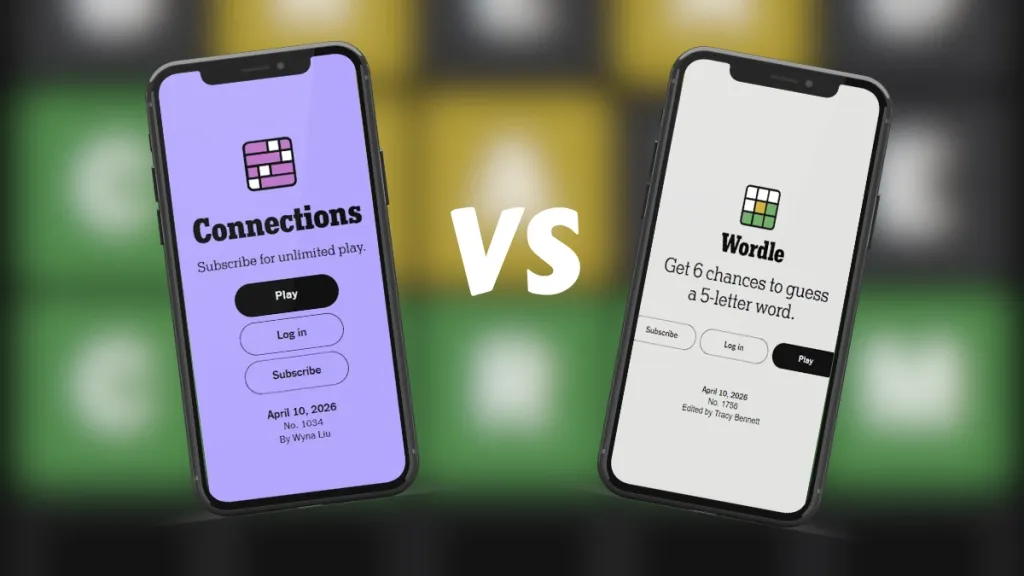
People searching wordle connections are usually looking for one of two things: either they’re trying to understand how Wordle relates to Connections (both daily puzzle games from The New York Times), or they’re searching for tips that apply across both. This guide covers both games, how they differ, and how to get better at each.
What Is Wordle?
Wordle is a daily word-guessing game where players have six attempts to guess a hidden five-letter word. After each guess, tiles change color to indicate whether a letter is correct and in the right position (green), correct but in the wrong position (yellow), or not in the word at all (gray). Everyone playing on a given day is trying to guess the same word, which is part of what made it such a widely shared, viral phenomenon when it first became popular — players could compare their colored grid results without spoiling the actual answer.
What Is Connections?
Connections is a different kind of daily puzzle, also published by The New York Times, where players are shown a grid of 16 words and need to sort them into four hidden groups of four, each sharing a common theme. The trick is that the puzzle is intentionally designed with overlapping red herrings — words that seem to fit one category but actually belong to another — and categories are typically color-coded by difficulty, from straightforward (usually yellow) to genuinely tricky wordplay-based connections (typically purple).
Key Differences Between the Two Games
While both are daily NYT word games that reset once every 24 hours, they test very different skills. Wordle is primarily about vocabulary, letter-frequency logic, and process of elimination across a fixed five-letter answer. Connections is more about pattern recognition, categorization, and resisting the pull of “obvious” but incorrect groupings — it tests lateral thinking as much as vocabulary. Wordle has one correct answer discovered through iterative guessing; Connections requires sorting all 16 words correctly, with limited mistakes allowed before you “fail” the puzzle for the day.
Tips for Wordle
A strong opening strategy matters. Many experienced players start with a word containing common vowels and frequently used consonants — something like “adieu,” “arose,” or “crane” — to maximize the information gained from the first guess. After that, paying close attention to letter position clues (green versus yellow) and avoiding repeating a gray letter is key to narrowing down possibilities efficiently. Building a mental list of common five-letter word patterns and letter combinations also helps as you get more practiced.
Tips for Connections
For Connections, the best approach is usually to start with the category you’re most confident about — often the easiest yellow-tier connection — rather than trying to solve all four at once. Watch for words that seem to obviously belong to more than one plausible group, since that overlap is usually intentional; the actual solution frequently isn’t the first grouping that comes to mind. If you’re stuck, look for wordplay-based connections — puzzles at the purple difficulty level often rely on hidden words, homophones, or category twists rather than straightforward theme matching.
Why These Games Have Become So Popular
Both games share a format that’s contributed heavily to their popularity: a single daily puzzle, shareable results, and a format short enough to complete in a few minutes but engaging enough to build a habit around. That daily cadence — one puzzle, once a day, the same for everyone — has proven to be a powerful hook, encouraging the kind of habitual, social, comparison-driven play that spreads through word of mouth and shared results grids on social media.
Where to Play
Both games are available through The New York Times Games section, either via the NYT Games app or website, with Wordle originally available free and Connections generally requiring an NYT Games subscription for full archive access, though the daily puzzle for each is typically accessible for free.
The Bottom Line
Wordle and Connections are two of the most popular entries in NYT’s daily puzzle lineup, testing different but complementary skills — vocabulary and elimination logic for Wordle, categorization and lateral thinking for Connections. Playing both regularly is a great way to keep your word-and-pattern-recognition skills sharp in just a few minutes a day.